
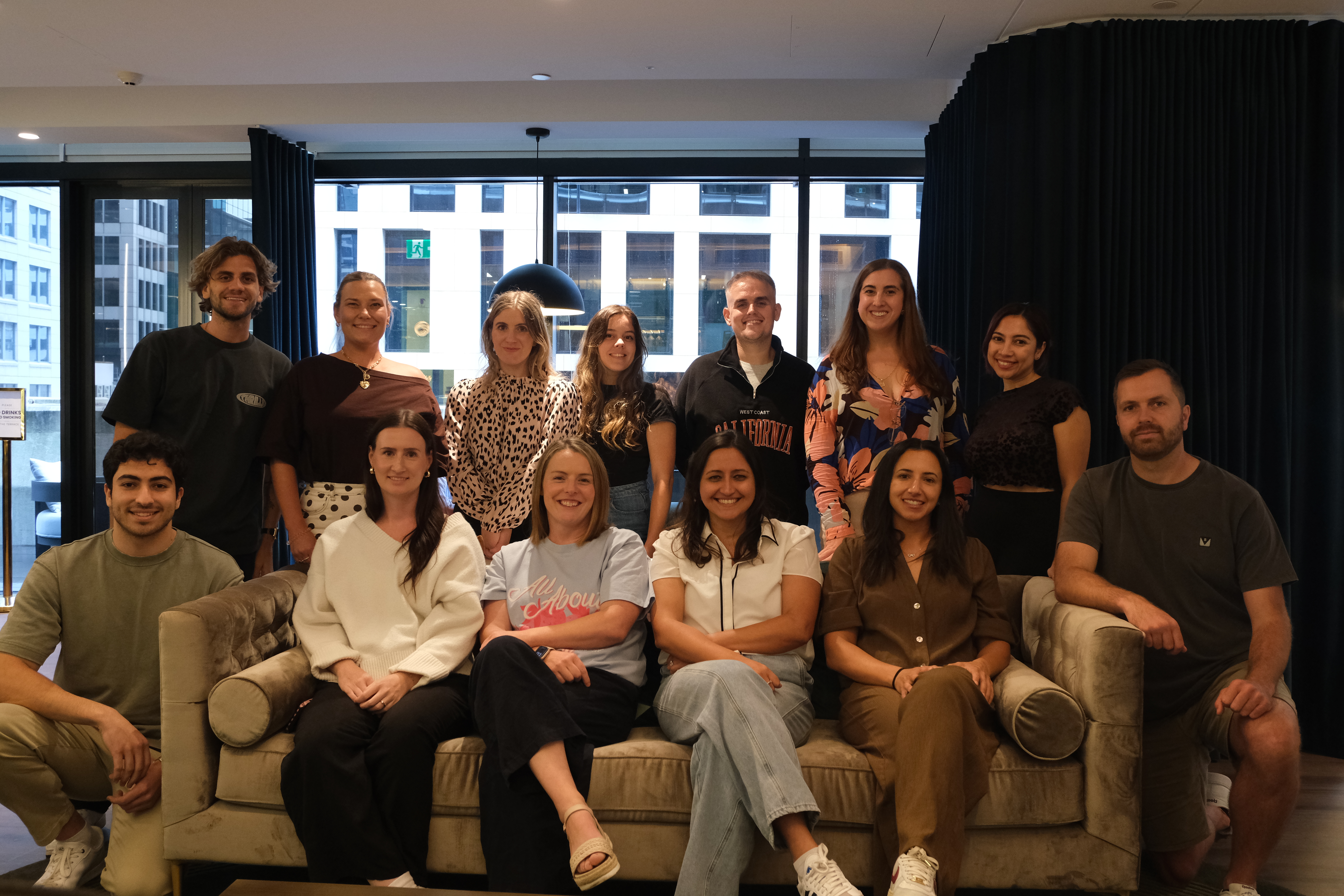
Words: Bec Haddad
I’ve always been someone who likes to move fast. If there’s a goal to hit or a problem to solve, my tunnel vision kicks in: get it done, do it quickly, prove you deserve a seat at the table, level up. That mindset has served me very well in my career.
Stepping into the General Manager role at The Bubble Co. in July 2025 changed the equation entirely. The skills that got me here weren’t the ones I needed once I arrived. What I’ve learned (and what I’m still learning) is that real leadership isn’t loud. It’s deliberate, patient, and a lot less glamorous than it looks from the outside.
Slow down, make smarter moves.
As I often tell my three young children, listening ears are one of the hottest accessories you can own. They go with anything, they’re practical, and you can take them with you into adulthood without looking odd. Constant listening – to frustrations, rhythms, hidden frictions – isn’t inaction, it’s preparation. You can’t improve a system you don’t fully understand. Nor can you empower a team you don’t know well. For years I have worked with this crew as their peer; it’s a very different experience learning who each of them are as their manager.
Leadership is not about having answers on tap or sprinting toward certainty. The real work is pausing long enough to understand what’s actually happening before you intervene. t’s less about rushing to get the answers, and more about creating the conditions for the right answers to emerge, with as little intervention from you as possible.
The real culture story
Company culture isn’t something you present in a role-play workshop (the stuff of my nightmares) or a schmick slide deck. It’s defined by the actions you take and the attitude you consistently bring to the table. Your team is paying attention to everything: how you show up when things go sideways, how you talk about people who aren’t in the room, whether your expectations apply to everyone or a few. You don’t get to declare the culture, you demonstrate it every day in small, compounding moments (Atomic Habits, anyone?). That’s either working for you or against you, whether you’re aware of it or not.
Be dependable without encouraging dependence
Servant leadership sometimes gets a bad wrap, dismissed as being synonymous with “too soft.” And yes, there’s a version of support that looks helpful but actually quietly blocks growth. Jumping in too quickly, solving problems before someone has had the chance to work through them, always being the one with the answer… it feels like service, but it quietly teaches people to wait instead of back themselves and take initiative.
The kind of leader I want to be is one people can bring hard problems to, knowing they’ll get honesty and support, not just answers. That means asking better questions instead of offering easy solutions. It means sitting with discomfort long enough to let someone else find their footing. When you do that consistently, you’re not just delegating, you’re building a team that doesn’t need you to function. And ultimately, that’s the goal.
Tough conversations really are easier with exposure
I’ve never been one to shy away from receiving hard feedback, but giving it? Yikes. That’s been a journey.
But here’s what I know now: dodging underperformance to keep the peace is like ignoring a slow leak: it only gets worse, and it’s going to cost you a helluva lot more to fix later. Clear, honest feedback isn’t unkind. It’s one of the most direct ways you can tell someone you believe they’re capable of more. Sitting on it because it feels uncomfortable is, frankly, a disservice to the person involved. And in this agency environment, avoid tough conversations is simply not an option when there are clients depending on us and team-wide success to consider.
You'll stuff up. Move on.
You won’t always make the right call. Sometimes you will need to make timely decisions without all the information at hand. You may completely misjudge how something is playing out and will need to move quickly to find a resolution. Having the humility to say “alright, that didn’t work – here’s Plan B, C, D” builds way more trust among a team than pretending to be infallible. You want to lead well? Leave your ego at the door.
Manage up without selling out
One of the more underrated leadership skills is knowing how to work well with the people above you. Not in a performative, yes-person way — but genuinely helping the people you report to make better, faster decisions by giving them clarity and context.
For me, managing up has meant learning to disagree well. Our director Renee and I don’t always see things the same way (just ask us about the PetSmart/PetsMart debate right now, I dare you), and that’s what makes the relationship work. The job isn’t to nod along; it’s to contribute perspective, context, and challenge when it matters. If you’re both pushing for the best outcome, you can be collaborative on building solutions without friction.
Managing up also means looking ahead: understanding the pressures above you, anticipating what your manager needs before they ask, and translating complexity into clarity. It’s partnership, not performance. The sweet spot is being both dependable and constructively challenging – the kind of person your boss knows will tell the truth, stay aligned, and keep things moving forward.
You won't stop learning
It’s on the morning school run when my kids choose to throw me life’s Big Questions. I often come home thinking, “How do I have this much authority over these small humans when they’re asking questions even ChatGPT can’t help me answer?”
I’ve needed to get comfortable with the fact that this role is very similar. The best thing you can do is own the gaps. Ask questions, stay curious, and learn from the people who’ve been there way longer than you and bought the overpriced t-shirt to prove it.
The expectation was never omniscience (yes, even among your curious kids). Rather, it’s honesty, consistency, and a willingness to figure it out. The leaders worth following aren’t the ones who perform certainty, they’re the ones who stay curious, ask the right questions, and build environments where other people feel safe enough to do the same.